Why BIM is Essential for Large Construction Projects?

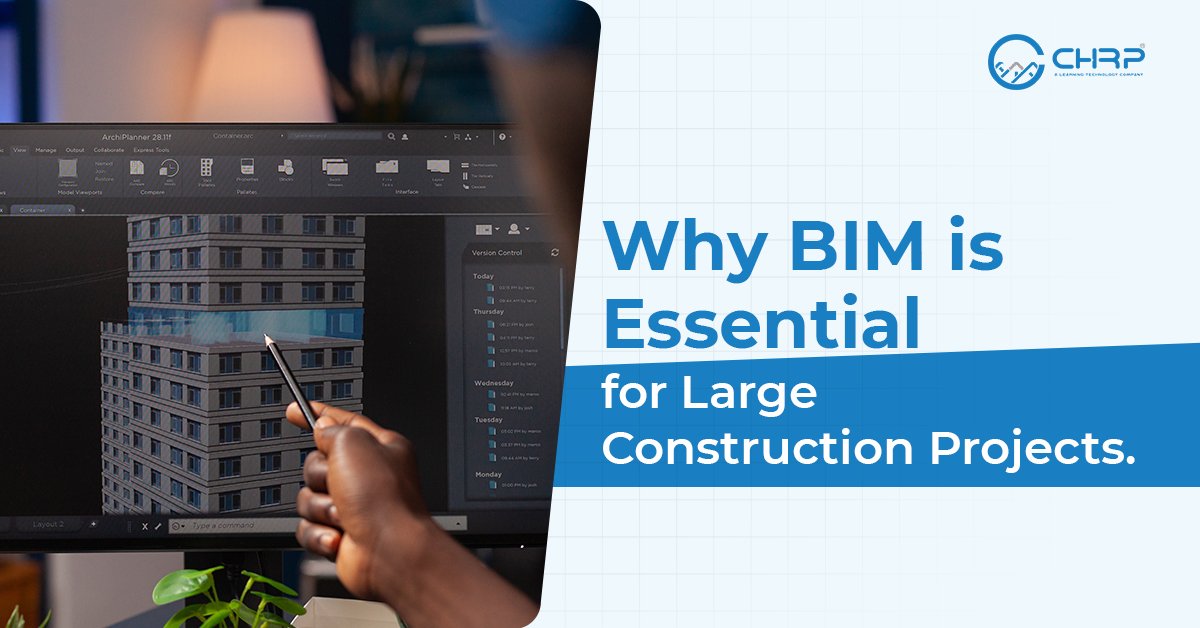
In today’s construction landscape, large-scale projects are becoming increasingly complex. Multiple stakeholders, tight timelines, cost pressures, and strict regulatory requirements make project execution more challenging than ever. Traditional construction planning methods often struggle to keep up with this level of complexity, leading to delays, cost overruns, and coordination issues.
This is where Building Information Modeling (BIM) is transforming how modern construction projects are planned, executed, and managed. For organizations handling large infrastructure or industrial developments, BIM is no longer optional. It is a strategic necessity.
For companies seeking reliable EPC services in India, integrating BIM into project workflows has become a key differentiator in ensuring efficiency, accuracy, and long-term success.
What is BIM and Why Does It Matter?
Building Information Modeling (BIM) is a digital process that enables the creation and management of detailed 3D models of a construction project. These models go beyond visual representation. They integrate data related to design, materials, timelines, costs, and lifecycle management.
Unlike traditional 2D drawings, BIM provides a collaborative platform where architects, engineers, contractors, and project managers work on a unified model. This ensures that every stakeholder has access to accurate, real-time information.
For large construction projects, this level of integration is critical. It reduces ambiguity, improves coordination, and ensures that decisions are based on data rather than assumptions.
The Challenges of Large Construction Projects
Before understanding the value of BIM, it is important to look at the common challenges faced in large-scale construction:
- Poor coordination between design and execution teams
- Frequent design changes leading to rework
- Budget overruns due to inaccurate cost estimation
- Project delays caused by scheduling conflicts
- Lack of real-time visibility into project progress
- Compliance and safety risks
These challenges are not uncommon. In fact, they are often the reason why large projects fail to meet expectations.
This is where BIM, combined with expert EPC services in India, plays a transformative role.
How BIM Solves These Challenges
1. Improved Project Visualization and Planning
BIM allows stakeholders to visualize the entire project in a detailed 3D environment before construction begins. This helps identify design issues early, reducing costly changes during execution.
For large projects, early-stage clarity can significantly improve planning accuracy and decision-making.
2. Enhanced Collaboration Across Teams
One of the biggest advantages of BIM is its ability to bring all stakeholders onto a single platform. Architects, structural engineers, MEP consultants, and contractors can collaborate in real time.
This eliminates communication gaps and ensures that everyone is aligned with the project objectives.
3. Clash Detection and Error Reduction
BIM enables automated clash detection, identifying conflicts between structural, electrical, and mechanical systems before construction starts.
This reduces rework, minimizes delays, and improves overall project quality.
4. Accurate Cost Estimation and Budget Control
With BIM, cost estimation becomes more precise as it is directly linked to the model. Quantity take-offs, material requirements, and cost projections can be generated automatically.
This helps organizations maintain better financial control and avoid unexpected expenses.
5. Efficient Project Scheduling (4D BIM)
BIM integrates time-related data, allowing project managers to simulate construction sequences and timelines.
This improves scheduling, reduces delays, and ensures optimal resource utilization.
6. Lifecycle Management and Sustainability
BIM is not limited to the construction phase. It supports the entire lifecycle of a project, including maintenance and operations.
This is especially valuable for large infrastructure projects where long-term efficiency and sustainability are critical.
The Role of BIM in EPC Services
Engineering, Procurement, and Construction (EPC) projects demand seamless integration across all phases. BIM plays a crucial role in enhancing the effectiveness of EPC services in India by:
- Aligning design with procurement requirements
- Ensuring accurate material planning and resource allocation
- Improving construction execution through data-driven insights
- Reducing risks associated with miscommunication and errors
When BIM is integrated into EPC workflows, it creates a streamlined and efficient project delivery model.
Why Businesses Are Choosing BIM-Driven EPC Solutions
Organizations today are not just looking for contractors. They are looking for partners who can deliver projects efficiently, cost-effectively, and with minimal risk.
This is why BIM-enabled EPC services in India are gaining significant traction across industries such as:
- Infrastructure and urban development
- Industrial and manufacturing facilities
- Energy and utilities
- Commercial real estate
The ability to combine advanced digital tools with execution expertise provides a strong competitive advantage.
Where CHRP-INDIA Adds Value
CHRP-INDIA offers integrated EPC services in India powered by advanced technologies like BIM.
Their approach focuses on delivering end-to-end solutions that combine engineering expertise with digital innovation.
Key Strengths:
- BIM-Driven Project Execution
Leveraging BIM for accurate design, planning, and coordination - End-to-End EPC Capabilities
Covering engineering, procurement, and construction under one integrated framework - Cost and Time Optimization
Reducing project delays and budget overruns through data-driven planning - High-Quality Standards and Compliance
Ensuring adherence to industry regulations and safety standards - Scalable Solutions for Large Projects
Supporting complex, multi-phase construction projects across industries
By integrating BIM into EPC workflows, CHRP-INDIA ensures that projects are delivered with precision, efficiency, and long-term value.
The Business Impact of BIM Adoption
For decision-makers, the adoption of BIM is not just a technological upgrade. It is a strategic investment.
Organizations that implement BIM in large construction projects benefit from:
- Reduced project risks and uncertainties
- Improved collaboration and communication
- Faster project completion timelines
- Better cost control and resource management
- Enhanced quality and compliance
Most importantly, BIM enables organizations to move from reactive problem-solving to proactive project management.
Conclusion
Large construction projects demand a level of precision, coordination, and efficiency that traditional methods cannot consistently deliver. BIM provides the tools and framework needed to meet these demands.
When combined with expert EPC services in India, BIM becomes a powerful enabler of successful project execution.
For organizations looking to deliver complex construction projects with confidence, adopting BIM is not just beneficial. It is essential.
And with partners like CHRP-INDIA, businesses can leverage the full potential of BIM to achieve better outcomes, reduce risks, and drive long-term success.